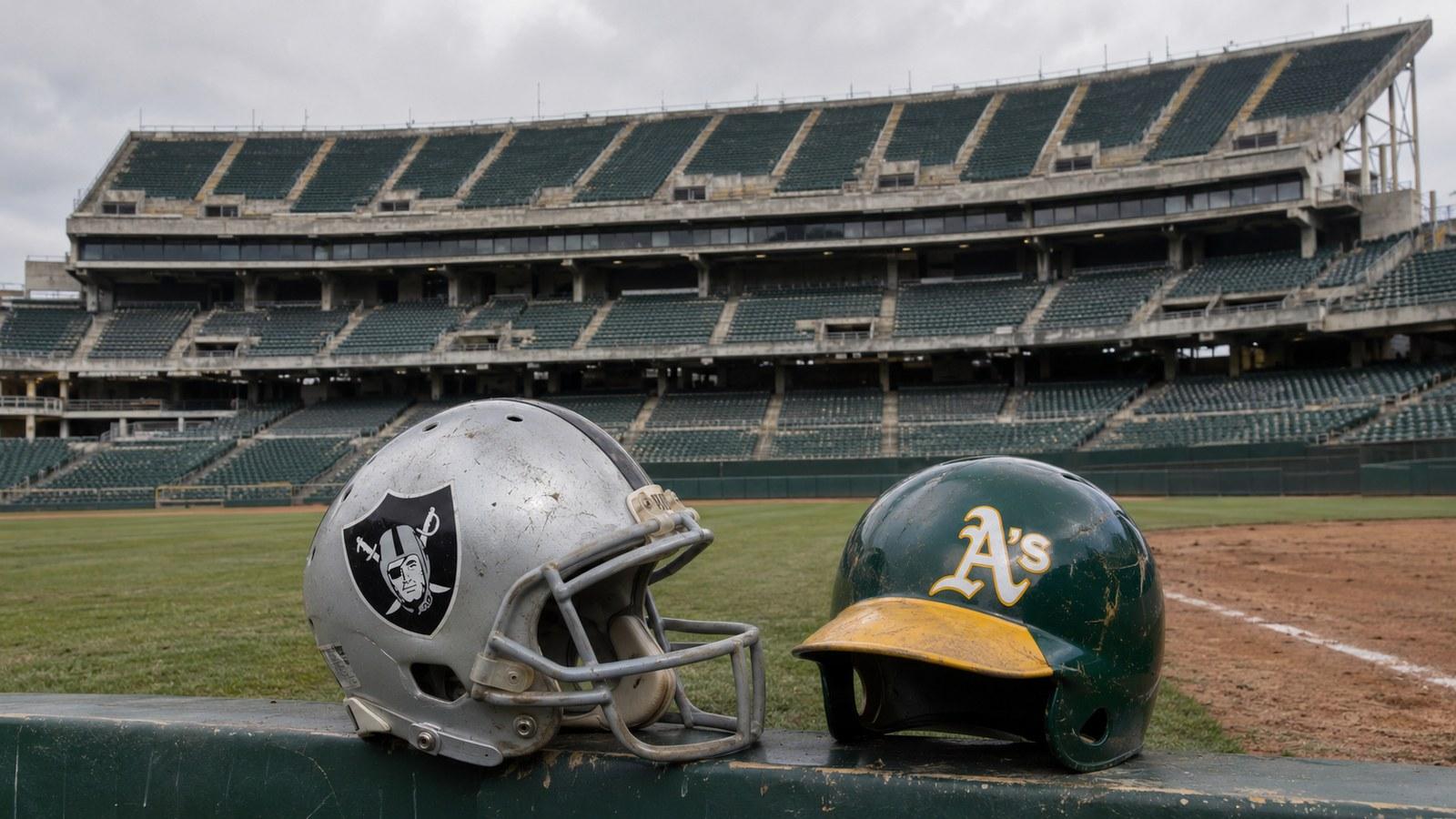
Blake Griffin uses Oakland to argue that taxpayer-funded stadiums never pay cities back
This week's Stepback follows the debt Oakland took on for the Warriors, Raiders and A's, then turns to the Bears, the Chiefs and Las Vegas. Griffin's case is that fans keep paying and the owners keep leaving.
By Beat Chuck Sports Desk / 1 source / Published November 18, 2026
Blake Griffin starts this week's episode of The Stepback in his hometown. Oklahoma City voters approved a new Thunder arena, he says, putting in $850 million of taxpayer money while the owners chip in $50 million. He spends the rest of the episode arguing that deals like that almost never work out for the cities that sign them.
- YouTube
Who Really Pays for Sports Stadiums?
Read source ↗ Team owners pitch stadiums as a win-win, Griffin says, "but they rarely, if ever, pan out." The owner keeps coming back for more, and if the city says no, the team leaves. He lists Seattle, San Diego, Houston, St. Louis and Glendale. Then he picks Oakland as the case study.
What Oakland paid
Oakland's three major pro teams won 10 championships between them, Griffin says, and the city and county paid to keep them. According to the episode, starting in the mid-1990s they took on a combined $340 million in debt to renovate the Coliseum complex. That brought the Raiders back from Los Angeles and kept the Warriors and A's in place.
Free to play
Make your call with Beat Chuck
Check the challenge board for the latest open games.
All Beat Chuck games →
The city thought it had protected itself. Under the Raiders deal, the government would keep personal seat license revenue that was expected to reach tens of millions. Under the Warriors deal, the team would have to pay off the debt if it left early. The county also agreed to sell its 50% stake in the property to the A's.
Griffin says none of that held up. The Raiders' PSLs didn't sell, which left Oakland on the hook for an extra $20 million a year. When the Warriors moved to San Francisco in 2019, he says, owner Joe Lacob fought Oakland over the stadium bond all the way to the state Supreme Court and lost. Griffin puts the amount at $45 million. The Raiders left for a taxpayer-funded stadium in Las Vegas the next year. The A's left the Coliseum last year for Sutter Health Park in West Sacramento, home of the River Cats, on the way to Las Vegas.
Griffin also points to the A's fans' reverse boycott, when they filled the Coliseum near the end. When owners asked for more, including help with a new waterfront ballpark, he says Oakland was tapped out, and the teams lost interest once the subsidies dried up.
The same pitch, new cities
The episode then moves to the NFL. Griffin says the Bears would reportedly get more than $1 billion from taxpayers in Hammond, Indiana, and that Kansas has pledged a record $1.8 billion for a Chiefs stadium complex in Kansas City, Kansas. He cites a Brookings Institution conclusion that sports subsidies can't be justified on economic development, income growth or job creation.
Nevada gets the sharpest numbers in the show. According to Griffin, taxpayers there have already put $750 million into the Raiders' stadium and are on the hook for $380 million more for the A's. That's more than $1 billion for two owners he says inherited their wealth: Mark Davis inherited the Raiders from Al Davis, and John Fisher's parents founded The Gap.
The one team that can't leave
Griffin's counterexample is Green Bay. The Packers are owned by a nonprofit public corporation with more than half a million local shareholders, none of whom get a dividend, he says. The league allows Green Bay's setup but bans new teams from using it and requires a single controlling owner or small group. Griffin says the other major sports have the same rule.
His closing point is that fans treat their teams as part of the community, and that loyalty is what gets stadium bonds passed. "As Oakland shows us," he says, "that passion is a one-way street."
This is a different subject from the first episode of The Stepback, which went after sports media. For more on the Bears, see the $10 billion Bronzeville pitch to keep the team in Chicago.